
Academics who found themselves at odds with the dominant response to the COVID-19 pandemic continue to grapple with the perceived lack of debate of, and resistance against, authoritarian overreach at their own institutions of higher education. As post-secondary instructors, we are now giving renewed thought to the possibility and challenge of teaching critical thinking in the classroom and beyond.
In our last news item “Responding to biased COVID science”, we described a prototype of a crowdsourced repository of corrections to the scientific record concerning the COVID-19 pandemic. In a similar manner, we set up a prototypical collection of teaching materials and experiences that reflect the views and values of dissenting academics.
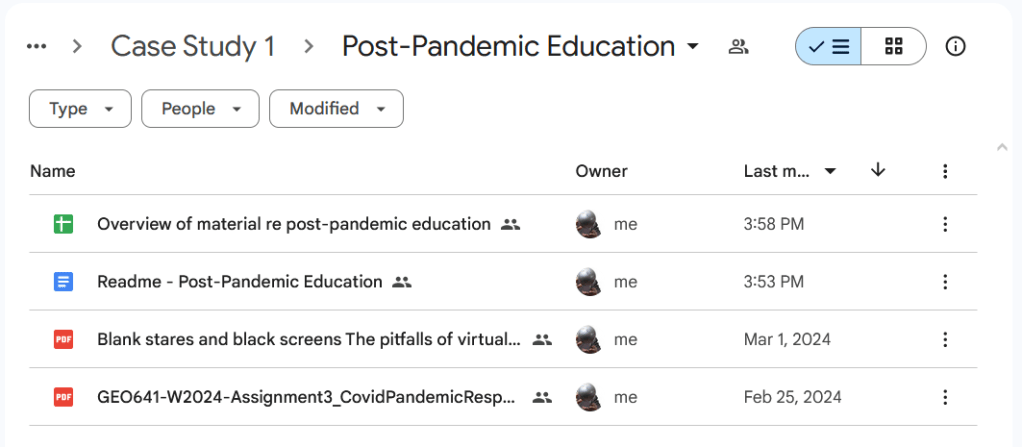
The shared folder “Post-Pandemic Education” currently contains a short introduction, an overview spreadsheet, and a first example of pandemic-related teaching material. The example is drawn from the author of these lines. In my course “GIS and Decision Support”, I ask students to complete a series of computer lab assignments analyzing geospatial data. The assignments are drawn from different areas of real-world application, so I introduced an analysis of the global COVID-19 pandemic measures and outcomes from the Our World in Data site.
Specifically, I asked students to look for unexpected patterns and gave them my recent paper for reference. Yet, few students seem able to think outside their mainstream media-defined box. In addition to sharing the assignment handout here, I am planning to analyze this experience or make it part of a larger collaborative article about this RECOVER19 subproject.
A second item currently included in the folder is an experience report by RECOVER19 co-applicant Dr. Ari Gandsman in the form of his summer 2022 essay about “The pitfalls of virtual learning and the challenges of post-pandemic education”. If you are interested in collaboration in the area of post-pandemic higher education, please contact Dr. Claus Rinner via crinner at torontomu dot ca.
 RECOVER19